-
September 15, 2026
At Trideo, we believe that 3D printing doesn't have to be limited to prototypes, small parts, or industrial components.
It can fill spaces. It can transform environments. It can become architecture.
And this project, created for Google at its Faria Lima office in São Paulo, demonstrates just how far additive manufacturing can go when technology, design, engineering, and scale are combined.

The project called for the creation of a spectacular three-dimensional installation approximately 11 meters wide by 3 meters high, consisting of multiple 3D-printed pieces that, once assembled, form a single organic and continuous surface around a large video panel.
A large surface area with one particularly challenging feature: the wall was not supposed to be simply flat.
Its design incorporates curves, undulations, and variations in volume that create a dynamic visual effect. In addition, the installation had to blend seamlessly with a central element: a large digital curtain/screen integrated into the composition.
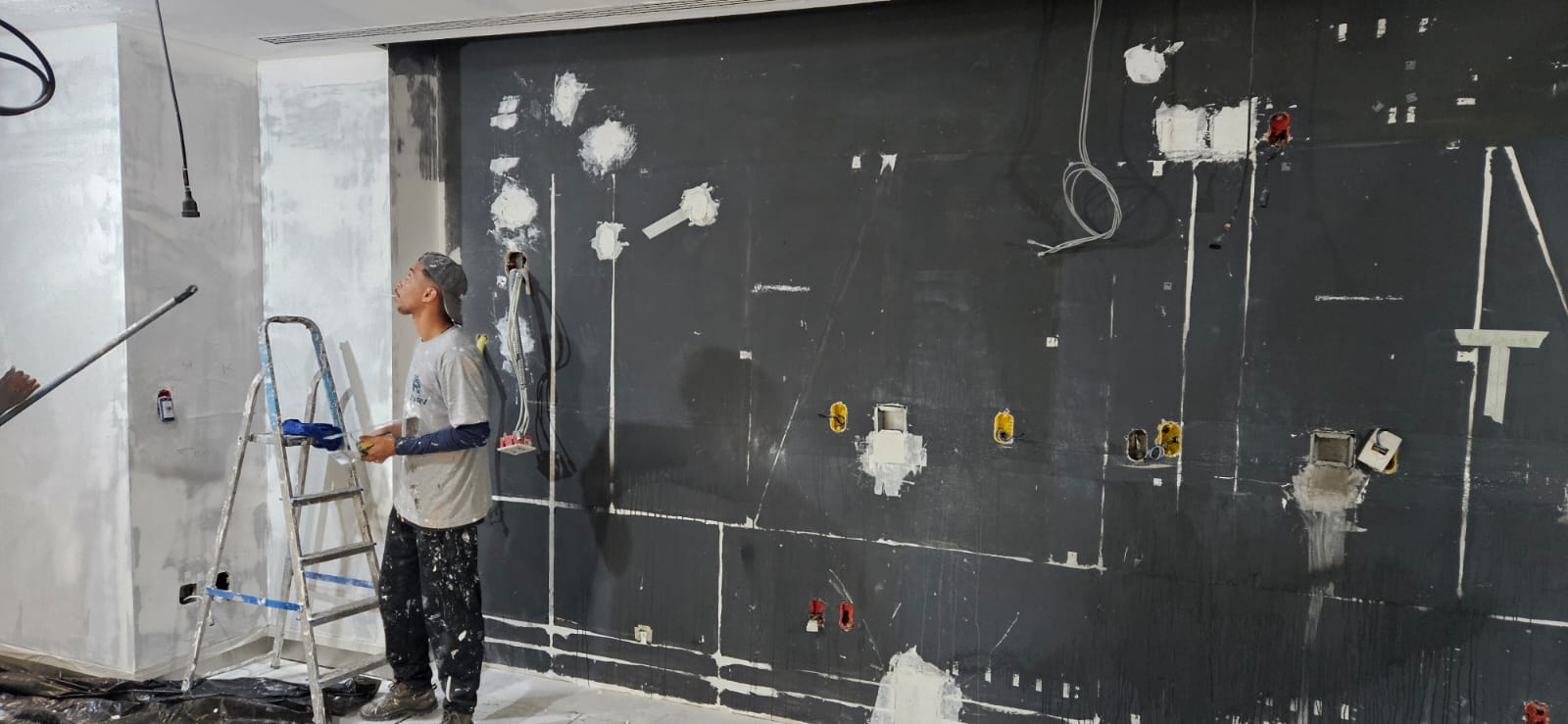
This posed several simultaneous challenges:
• Production of large-scale parts.
• Precise reproduction of organic geometries.
• Strategic division of the project into multiple modules.
• Dimensional control to ensure successful assembly.
• Repeatability during large-scale production.
• Transport and handling of parts.
• Integration with existing architecture.
• Uniform visual finish after assembly.
In other words: it wasn't just a matter of printing large pieces; we also had to design a system capable of forming an entire wall.
To make the project possible, the large surface was digitally divided into different components. Each piece was produced individually using 3D printing and then assembled to form the final composition.
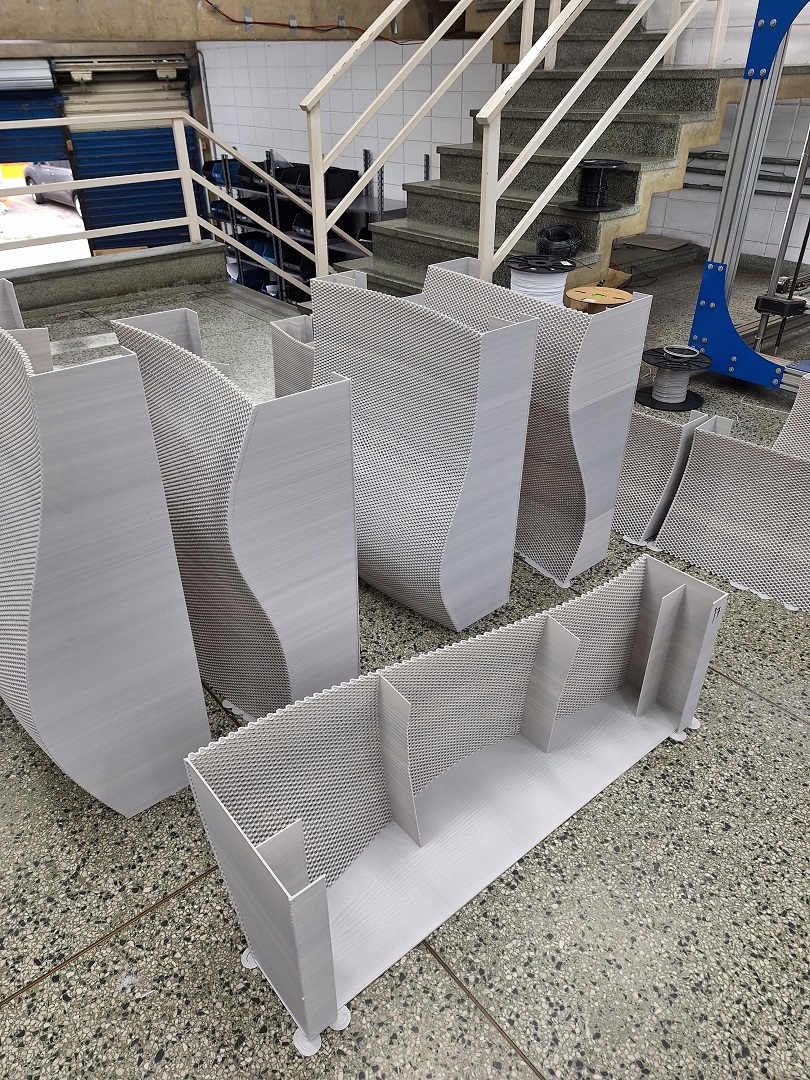
The technology made it possible to reproduce the undulations of the surface with visual continuity, maintaining the organic design language intended for the environment, and there is one particularly interesting detail: the print texture itself becomes part of the installation’s aesthetic. The layers generated during the manufacturing process cease to be a mere technological record and instead become part of the piece’s visual language.
One of the major differences between printing a conventional object and producing an architectural installation is the need to conceive of the project as a structural system.
Each module needs to answer questions such as:
• How does it connect to the next one?
• How is it transported?
• How is it installed?
• How does it remain stable?
• How does it look once it's attached to the rest?
Therefore, before beginning manufacturing, the digital model must be analyzed and prepared for production. The complete geometry is broken down into a series of manufacturable parts, taking into account dimensions, structure, joints, and tolerances, and this process is essential to ensure that what works in the digital environment also works in the real world.
The completed project occupies approximately:
11 m wide x 3 m high ≈ 33 m² of floor space
.jpeg)
But the numbers don't tell the whole story: an installation of this kind involves transforming an architectural space into a collection of perfectly coordinated pieces. Each module is part of a larger whole, and every curve must meet another curve. Every joint must function properly. And all the pieces must ultimately come together to create a single visual experience.
That is additive manufacturing applied on an architectural scale.
Once installed, the technology takes a back seat—and that is precisely what makes it so interesting. Visitors don’t necessarily think about printers, filaments, layers, or digital files; rather, they see a large sculptural surface that envelops the space and frames a central screen.
The undulations create movement even when the surface remains still. The lighting highlights the variations in depth. And the screen adds a second visual element that contrasts with the physical texture of the installation.
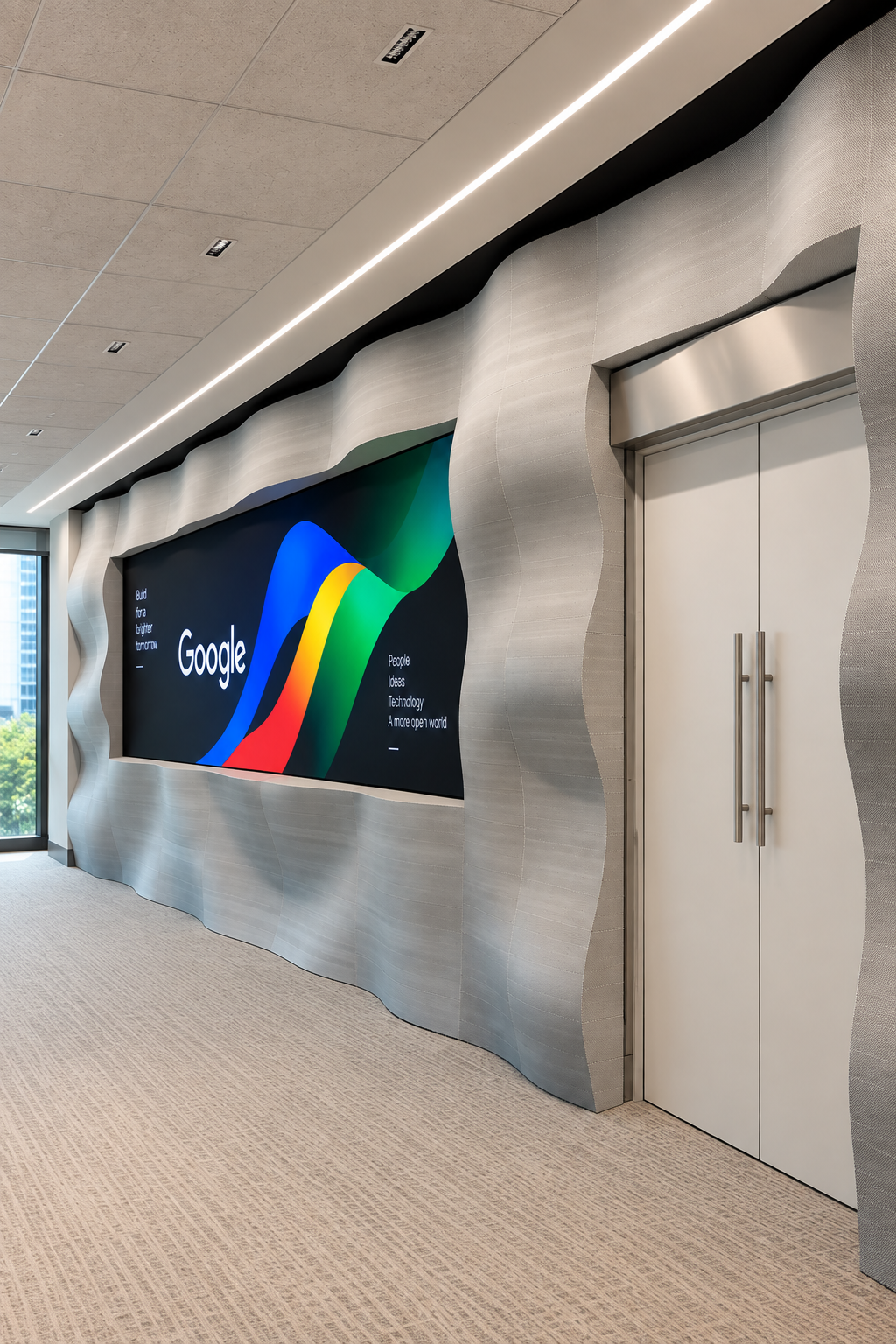
The result is a combination of architecture, design, digital fabrication, art, and technology.
For years, 3D printing was primarily associated with prototyping. Today, that reality is changing.
The same logic that makes it possible to manufacture a small component can be used to produce furniture, decorative pieces, art installations, structures, architectural components, and large-scale surfaces. The difference lies in the available technology, production capacity, and, above all, the engineering behind the project.
This project for Google is a concrete example of that evolution. We're not talking about an architectural model.
We are talking about a real architectural piece, produced using additive manufacturing and installed in a highly prominent corporate space.
This project represents exactly the kind of challenge that drives us at Trideo:
• Receive complex geometry.
• Understand the project's needs.
• Find the best manufacturing strategy.
• Break down a large-scale structure.
• Produce each module.
• Check the result.
• And finally, see how hundreds of digital decisions come together to create a physical space.
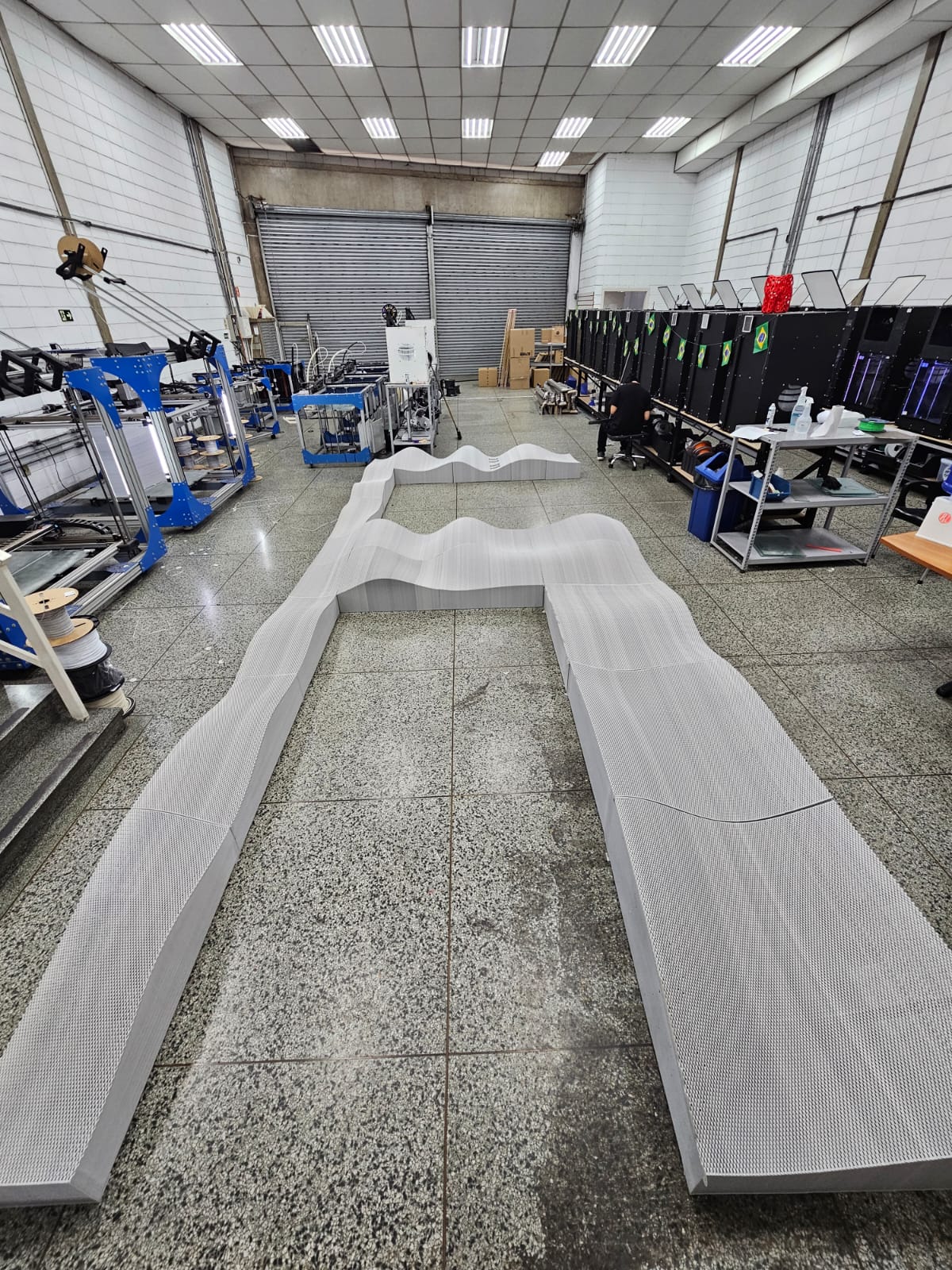
Because 3D printing isn't just about making a part; it's more about discovering what can be done when traditional manufacturing limitations no longer define the design.
The project carried out for Google demonstrates that additive manufacturing can be part of projects far more ambitious than prototype production.
Architects, designers, companies, agencies, and creative studios can use 3D printing to create customized, large-format solutions with unique geometries.
And when a project requires scale, precision, and production capacity, Trideo is ready to transform digital files into physical objects, such as our line of lamps and decorative items.
From a single piece to an 11-meter-wide installation, your next big idea can be printed, too.

Upload your .stl or .obj model and get a quote in minutes. No obligation.

Industrial 3D printing service and professional printers in Argentina, Brazil and Mexico.