-
September 15, 2026
There are projects that are printed. And there are projects that change the way we look at 3D printing.
At Trideo, we believe that additive manufacturing doesn't have to be limited to prototypes, small parts, or industrial components.
It can fill large spaces. It can transform environments. It can become part of the architecture.
This project, developed for a corporate space in São Paulo, is an example of what happens when technology, design, engineering, and manufacturing come together to take 3D printing to an extraordinary scale.
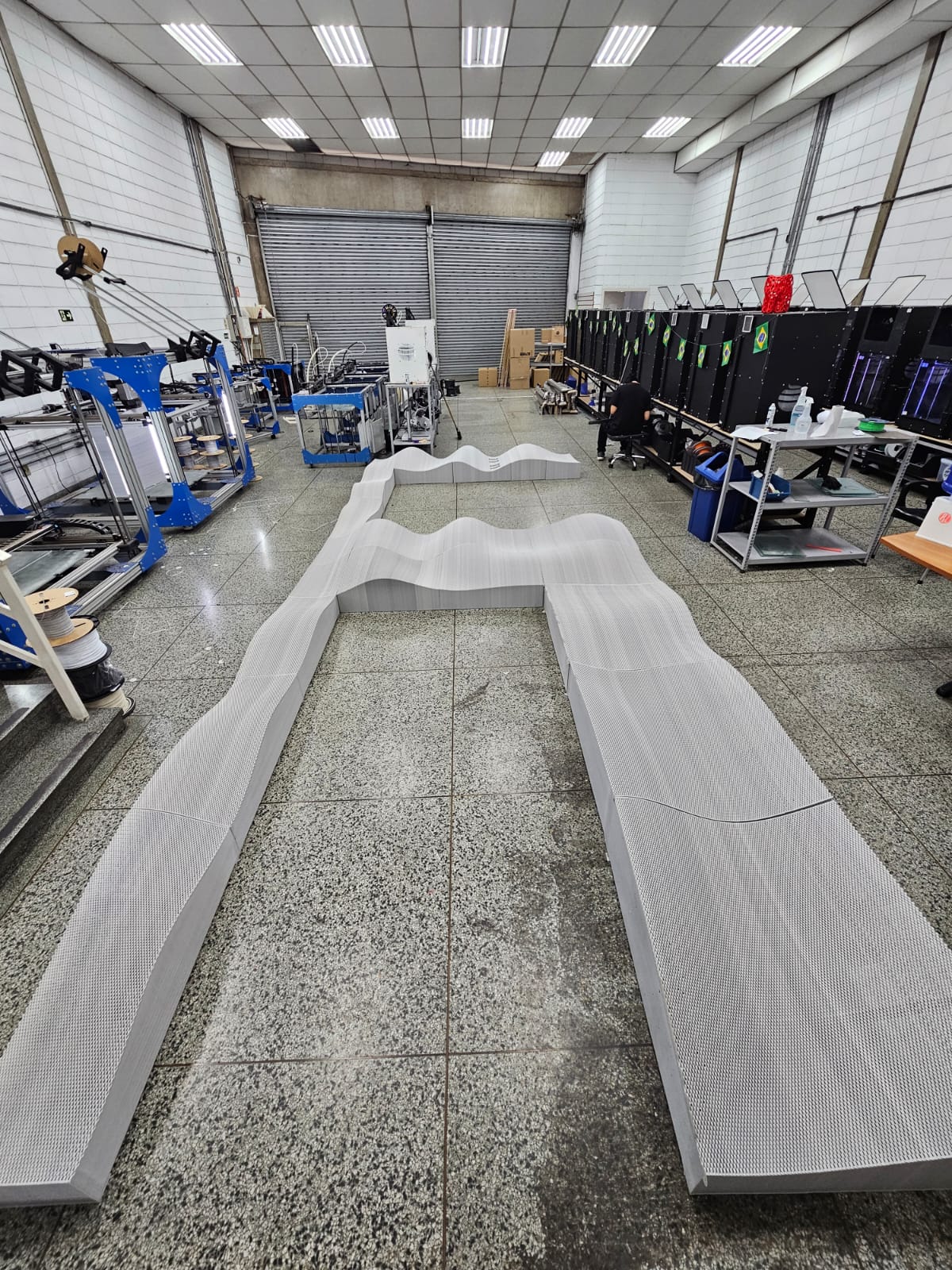
The project involved creating a three-dimensional installation approximately 11 meters wide by 3 meters high, consisting of multiple 3D-printed pieces that, once assembled, would form a single, organic, continuous surface around a large video panel.
But the surface couldn't just be flat.
Its design incorporates curves, undulations, and varying depths, creating a dynamic and sculptural visual effect.
In addition, the installation had to integrate seamlessly with a large digital display located in the center of the composition.
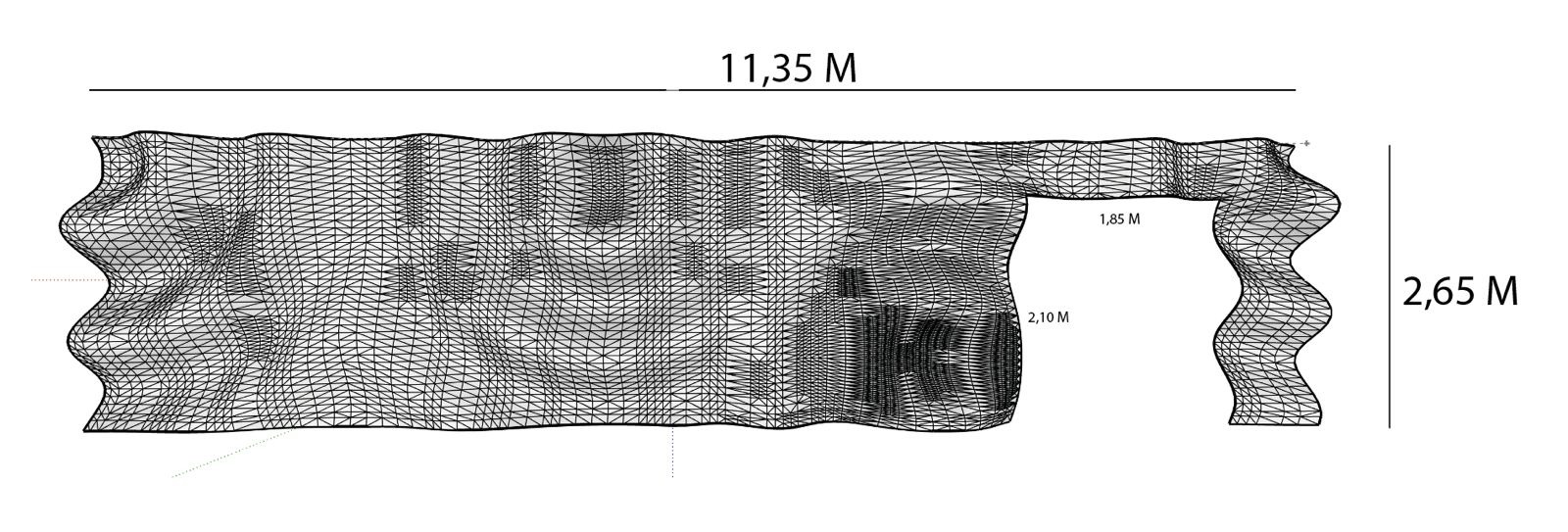
The challenge, therefore, went far beyond simply manufacturing large parts.
It was necessary to develop a system capable of transforming a complex digital design into a physical installation measuring approximately 33 m².
Among the project's main challenges were:
In other words: it wasn't just a matter of printing parts.
We had to design a manufacturing strategy capable of forming a complete wall.
To make the project possible, the large surface area was digitally divided into different components.
Each module was individually prepared for manufacturing and then assembled to form the final structure.
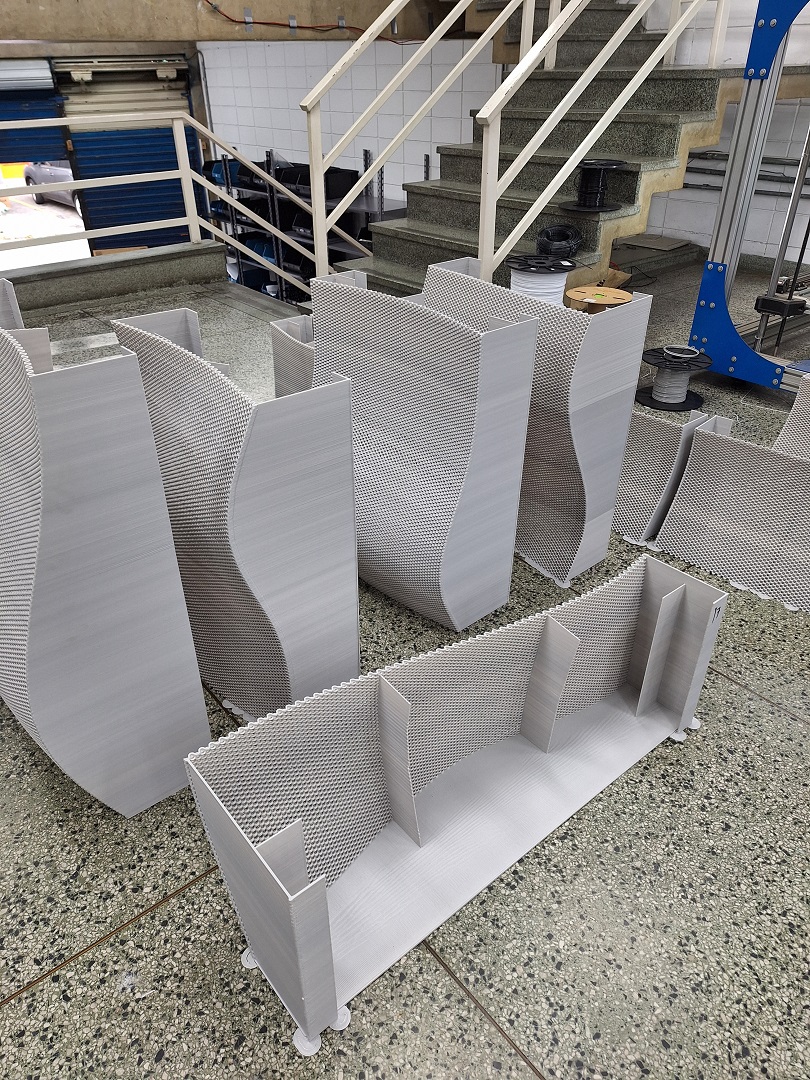
This strategy made it possible to reproduce the undulations and variations in surface volume while maintaining the visual continuity of the design.
And there is one particularly interesting detail: the texture created by the 3D printing process itself became part of the installation's aesthetic.
The layers created during the manufacturing process—which might normally be considered merely a technical feature—are visually integrated into the piece and reinforce its identity.
The technology isn't hidden. It's part of the design.
Printing an architectural installation is very different from manufacturing a conventional object.
When a component reaches large dimensions, the project must be conceived as a construction system.
Each module needs to answer different questions:
Therefore, before production begins, the digital model must be carefully analyzed and prepared.
The complete geometry is transformed into a series of manufacturable parts, taking into account dimensions, structure, joints, and tolerances.
This process is essential to ensuring that what works in the digital environment also works in the real world.
Because large-scale printing doesn't just mean printing bigger. It means thinking differently.
The final result takes up approximately:
11 m wide × 3 m high ≈ 33 m² in area
.jpeg)
But the numbers don't tell the whole story.
An installation of this kind involves transforming an entire architectural space into a collection of perfectly coordinated elements.
Each module is part of a larger whole. Each curve must connect to another curve. Each joint must function properly.
And all the pieces must come together to create a single visual experience.
That is additive manufacturing applied on an architectural scale.
Once installed, the technology is no longer the center of attention.
What remains is a large sculptural surface that transforms the space and frames the central digital panel.
The ripples create movement even when the surface remains still.
The lighting highlights the different depths.
The texture of the pieces lends a sense of materiality.
And the digital display adds a dynamic visual element that contrasts with the physical surface of the installation.
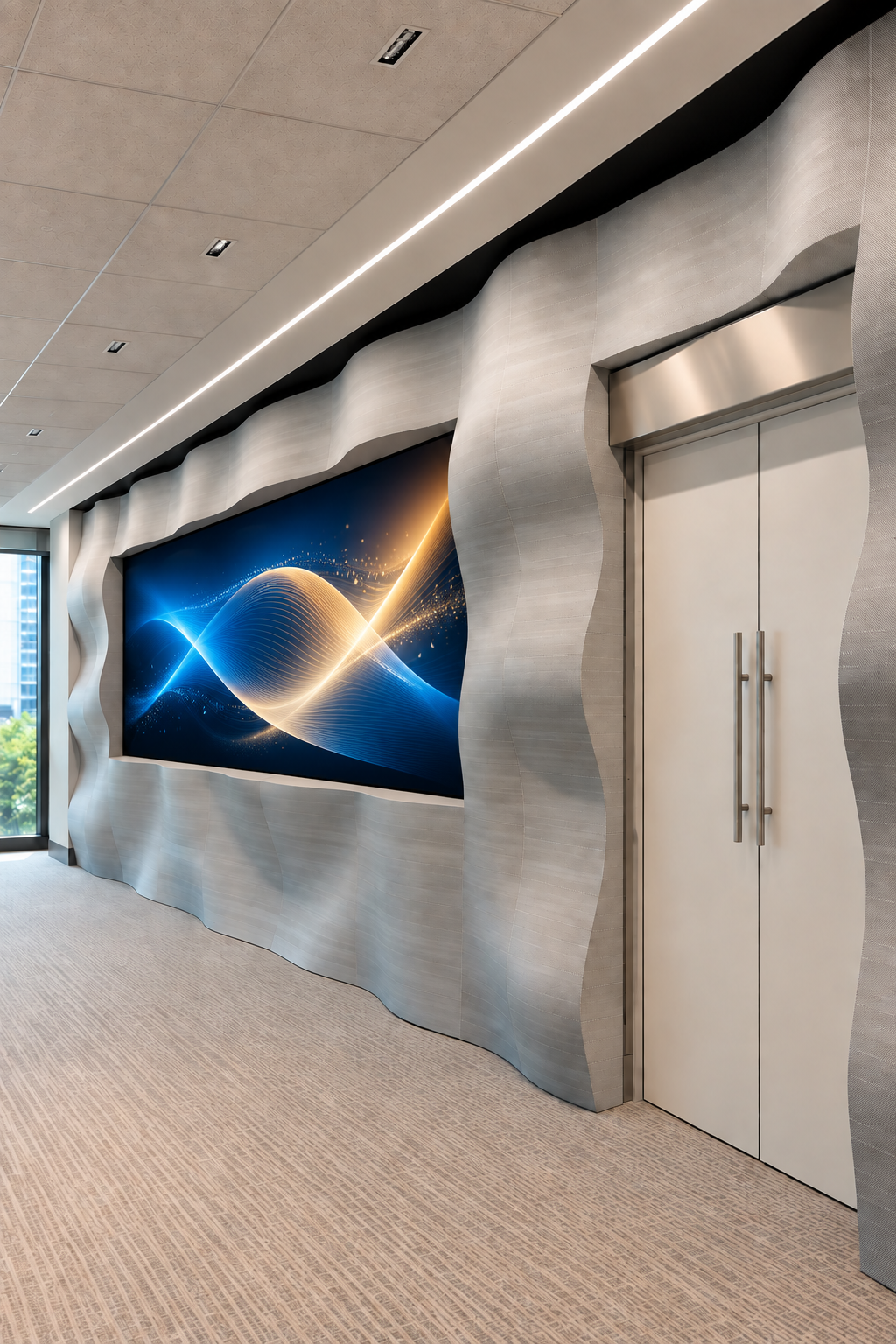
The result combines:
Architecture + design + digital fabrication + art + technology.
And it shows that 3D printing can play a much more significant role in contemporary spaces.
For years, 3D printing was primarily associated with prototypes.
Today, that reality is changing.
The same logic that makes it possible to manufacture a small component can be used to produce:
The difference lies in the available technology, production capacity, and, above all, the engineering behind each project.
This project demonstrates that additive manufacturing can move beyond the laboratory and directly into architectural spaces.
We're not talking about a model.
We're talking about a real, large-scale installation, produced using 3D printing and integrated into a corporate space.
This project is exactly the kind of challenge that drives us at Trideo.
Receiving complex geometry, understanding the project’s requirements, identifying the best manufacturing strategy, breaking down a large-scale structure, producing each module, and finally seeing how hundreds of digital decisions come together to form a physical space.
We are prepared to undertake projects that require scale, precision, customization, and production capacity.
Because 3D printing isn't just about making a part; it's about discovering what can be done when traditional manufacturing limitations no longer define the design.
This completed project demonstrates that additive manufacturing can be part of projects far more ambitious than prototype production.
Architects, designers, companies, agencies, and creative studios can use 3D printing to create customized, large-format solutions with unique geometries.
And when a project requires scale, precision, and production capacity, Trideo is ready to transform digital files into physical objects, such as our line of lamps and decorative items.
From a single piece to an 11-meter-wide installation, your next big idea can be printed, too.

Upload your .stl or .obj model and get a quote in minutes. No obligation.

Industrial 3D printing service and professional printers in Argentina, Brazil and Mexico.